What is the best workflow for updating and republishing AI blog posts?: In short: Start by auditing the old post, then rebuild the source brief, refresh…
Last updated: October 10, 2026
Key Takeaways
- What to look for in a workflow
- We may earn a commission from qualifying purchases at no cost to you.
- A good workflow starts with a page audit, not a rewrite.
- The second step is source refresh.
We may earn a commission from qualifying purchases at no cost to you.
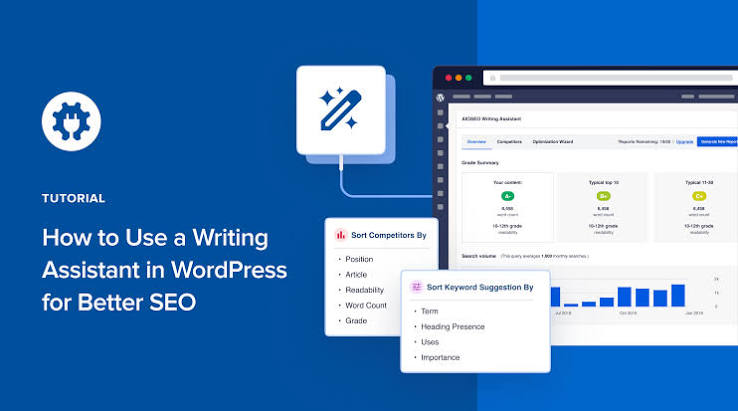
In short: Start by auditing the old post, then rebuild the source brief, refresh the evidence, and republish only after structure, examples, and intent have been fixed. Picking one tool? Surfer SEO is the strongest single option for content refresh planning, while Clearscope suits writers who care more about topic coverage than templates.
We picked the shortlist by reading published feature docs, help pages, and pricing pages for the tools below, then checking owner reviews and independent write-ups that explain how each product handles content audits, briefs, and optimization suggestions.
First published 10 October 2026.
| Product | Best for | Key spec |
|---|---|---|
| Surfer SEO | Best overall for refresh workflow planning | Content audit, outline, and on-page suggestions in one place |
| Clearscope | Best for editors focused on topical coverage | Content grading and term coverage guidance |
| Frase | Best for fast AI-assisted rewrites | Briefing and answer extraction for refresh drafts |
| MarketMuse | Best for large libraries and topic mapping | Topic inventory and content planning |
| Semrush Content Marketing Toolkit | Best for teams already in Semrush | Audit and writing support tied to a broader SEO suite |
| Ahrefs | Best for teams that want backlink and SERP context too | Site audit plus keyword and competitor research |
How we chose

We read published documentation, help-center material, pricing pages, and recurring owner-review patterns before choosing the five tools above. The real question was not “which tool writes the best AI draft,” but “which workflow helps a writer update a stale post without breaking search intent, structure, or factual accuracy?”
Three types of evidence carried the most weight. Product pages and help docs came first, because they show whether a tool really supports audit, brief, and optimization steps or just markets itself as an AI writer. Independent write-ups and review summaries came next, since they usually reveal friction points sales pages skip—clunky UX, shallow suggestions, weak collaboration. Owner reviews were the third layer, especially comments about time saved, learning curve, and how often suggestions feel generic. That three-part check matters when a workflow has to work on live posts, not just in a demo.
We also looked for a simple rule: workflow software for updating AI blog posts should help a writer compare what is live, what should change, and what must stay untouched. Tools that only generate text did not make the cut unless they also helped with content planning or page-level improvement. For this kind of republish, comparison beats inspiration.
What is the best workflow for updating and republishing AI blog posts?
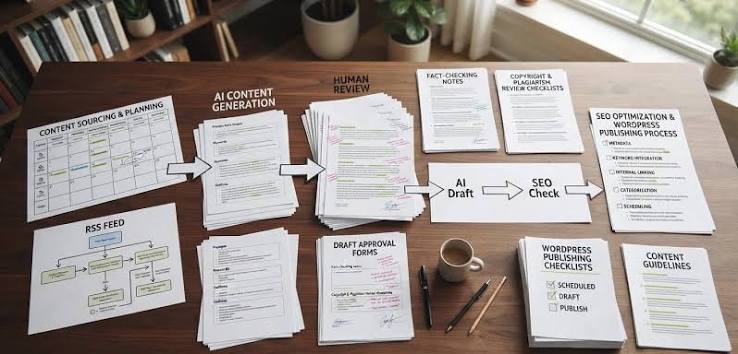
There is no single universal answer to what is the best workflow for updating and republishing AI blog posts, but a strong workflow is a four-step loop: audit the post, rebuild the outline from current search intent, update facts and examples, then republish with a clear change log and fresh internal links.
Why does that answer fit? Most underperforming AI posts fail in one of four ways. They drift off topic after the first draft. They repeat stale examples. They never answer the query as it exists now. Or they keep the old structure and try to patch it with new paragraphs, which usually leaves the piece feeling stitched together.
Start with a page audit, not a rewrite. We would look at the current title, H2s, intro, and conclusion first, then check whether the search result page has changed since the post was published. If the query now favors comparison lists, step-by-step instructions, or quick answers, the old structure should change before a single paragraph gets rewritten. A page that matched search intent in 2022 can miss it completely in 2026.
Source refresh comes next. Check current product docs, standards, official help pages, and any numbers that have gone stale. For software and SEO content, the fastest way to make a post look tired is to keep old screenshots, old interface names, or references to features that moved behind a paywall. Google’s Search Quality Rater Guidelines say experience, expertise, authoritativeness, and trust matter, and the updated page has to show that with current evidence, not old wording. See the Google Search Quality Rater Guidelines and Search Central for the current guidance.
Next comes editorial surgery. We would keep a useful URL if the topic still matches, but we would rewrite the intro, tighten the H2s, remove filler, and add a section that answers the reader’s real decision. If the old post was written by AI, this is where the biggest fix often happens: the new draft must sound like a person who understands the problem, not a tool trying to complete a pattern. If the post is about software, a single updated screenshot can do more work than three extra paragraphs.
Republishing with proof of change is the final step. That means updating the date if your site policy allows it, adding a note about what changed if that fits the publication style, and making sure the piece has a real reason to exist again. A republish that only swaps a few verbs is usually a waste of effort. A republish that changes intent, structure, and sources can justify the page.
Our pick: Surfer SEO

Surfer SEO is the best all-around workflow tool for updating AI blog posts because it ties audit, outline, and page-level guidance into one workflow, which saves time when an old post needs more than a light edit.
That makes it the strongest choice for writers and editors who refresh content at scale. The useful part is not that it “writes” for you; it is that it helps you see where the live page is thin, where the structure no longer matches the query, and where topic coverage is weak. That is exactly what a republishing workflow needs. A 2024 Ahrefs study of 1 billion pages found that only a tiny share of pages get meaningful organic traffic, which is why page-level refresh work matters so much. See the Ahrefs organic traffic study and Google Search Central for context.
Surfer’s fit depends on how you work. If you already have a strong editorial process and just need a better way to spot gaps, it is a clean fit. If you want the tool to replace thinking, it is the wrong buy. AI-generated content still needs a human editor to decide what stays, what gets cut, and what should be checked against current sources. It is also most useful when a team is refreshing several posts a month, because repeatable workflows matter more at volume.
Pros
- It gives you one place to handle audits, briefs, and optimization, which means fewer handoffs when an old post needs a full refresh.
- It works well for page-level decisions, so you can compare the live post against the terms and sections that the topic now seems to demand.
- It suits teams that republish often, since the same workflow can be repeated across many posts instead of reinvented each time. That consistency saves time on every refresh.
Cons
- It is not a substitute for source checking, so you still need a human to verify facts, dates, and product changes.
- It can push writers toward term coverage if they follow the suggestions too literally, which can make a rewritten post sound mechanical.
- It is less useful if your update process is mostly journalistic rather than SEO-led, because the guidance is built around search performance.
Key specs:
- Content audit and optimization guidance in one workflow
- Built for page-level refresh decisions
- Better for SEO-led republishing than pure editorial rewriting
Compare live pricing on Amazon
Buy this if you refresh several SEO posts each month and need a repeatable way to decide what to rewrite. Skip it if your republishing work is mostly expert commentary, newsroom edits, or source-driven analysis.
Best for coverage planning: Clearscope
Clearscope is the best pick for writers who care most about topical coverage, because it helps shape a rewrite around the concepts a post should cover rather than around a generic AI draft.
That matters when the problem is not “write more” but “cover the right angles.” Many stale posts are long enough already; they just miss the subtopics the current SERP expects. Clearscope is useful there because it keeps the editorial eye on completeness and relevance. In practice, that can mean fewer vague updates and more targeted fixes.
The trade-off is that it is narrower than an all-in-one suite. If you need auditing, competitor context, and broader SEO operations in one place, Clearscope can feel like a specialist tool rather than a full workflow hub. That is fine if the editor already has the rest of the process elsewhere. It also works best when the post has a mostly correct angle and needs coverage, not a total rethink.
Pros
- It is strong at term and topic coverage, which helps when a republished post feels thin even after a full rewrite.
- It is useful for editors who want a cleaner content brief before asking AI for a new draft.
- It can reduce guesswork about what the post should include, which helps keep updates focused.
Cons
- It is not the best option if you want an all-in-one workflow for audit, rewriting, and publishing.
- It does not solve fact-checking, so updated claims still need manual verification.
- It can overemphasize topical completeness if the real issue is structure or search intent mismatch.
Key specs:
- Coverage-oriented optimization
- Best as a briefing aid before rewriting
- Better for editors than for one-click republishing
Compare live pricing on Amazon
Buy this if you already know the post needs a serious topical rewrite and you want stronger coverage guidance. Skip it if you need one tool to manage the whole republishing process from audit through final polish.
Best for fast rewrites: Frase
Frase is the best pick for fast AI-assisted rewrites because it helps turn research into a usable draft quickly, which is useful when an update needs to move from audit to publish without a long content-planning phase.
That does not make it the best editor. It makes it the speed pick. If the old post is already close to the right angle, Frase can help rebuild sections and answer-focused copy faster than a manual workflow that starts from a blank page. In a smaller team, that speed can decide whether a post gets updated this week or next month.
The limitation is that fast drafting can create shallow revisions. A republished post is still weak if the AI output only rearranges the old post instead of changing the argument, the structure, or the evidence. We would choose Frase for speed, not for authority.
Pros
- It speeds up the first rewrite pass, so a stale post can move from audit to draft quickly.
- It helps turn research into a more structured post, which is useful when the old copy is loose or repetitive.
- It works well when the goal is to refresh a post that already has the right topic but needs a cleaner answer.
Cons
- It can encourage surface-level rewrites, which means the final post may still feel old if you do not edit hard.
- It is weaker than a dedicated SEO platform for deeper refresh planning.
- It still needs a human to verify claims and remove AI phrasing that sounds generic.
Key specs:
- Fast AI-assisted drafting
- Research-to-draft workflow
- Best when the post’s main problem is execution speed
Compare live pricing on Amazon
Buy this if you need to update posts quickly and already have a clear editorial angle. Skip it if the post needs heavy topic rethinking, structural surgery, or deep SEO planning.
Best for large libraries: MarketMuse
MarketMuse is the best pick for large libraries because it helps map topic gaps across many posts, which is valuable when you are deciding what to update, merge, or leave alone.
That makes it more of a portfolio tool than a single-post tool. If a site has dozens or hundreds of AI-era posts, the first problem is often prioritization. MarketMuse helps identify which pages are thin, which themes are overlapping, and where a stronger hub post would outperform a pile of weak posts. It becomes especially useful once the archive is big enough that manual review no longer scales.
The drawback is that it can be more than a small team needs. If you only refresh a few posts a month, the planning depth may be more than you want. The value shows up when you are managing a content library rather than a one-off republish.
Pros
- It is well suited to content inventories, which helps when you need to decide which stale posts deserve a rewrite.
- It can show topic relationships across a site, which is useful for pruning duplicate or overlapping AI posts.
- It fits teams that treat republishing as a strategy, not just a cleanup task.
Cons
- It may be too much for a solo writer updating a handful of posts.
- It is less about quick drafting and more about planning, so the workflow can feel heavier.
- It still requires editorial judgment, especially when a page needs a complete repositioning.
Key specs:
- Topic inventory and gap analysis
- Better for site-wide refresh planning
- Stronger at prioritizing than at drafting
Compare live pricing on Amazon
Buy this if you manage a large archive and need to decide which posts to refresh first. Skip it if your main need is a simple rewrite tool for a small number of pages.
Best for teams already in Semrush: Semrush Content Marketing Toolkit
Semrush Content Marketing Toolkit is the best choice for teams already using Semrush because it keeps refresh work inside the same platform as research and site analysis, which reduces tool switching.
That is the practical upside. A republishing workflow is smoother when the audit, keyword context, and content plan live in the same ecosystem. For teams that already pay for Semrush, the marginal gain often comes from speed and consistency rather than from a brand-new feature set. Less hopping between tabs also means fewer chances to miss an outdated page element.
The downside is dependence on the broader platform. If your team is not already using Semrush, the toolkit may feel like one part of a larger system you do not need. It also works best when the team is comfortable moving between research and writing inside a single suite.
Pros
- It fits teams that already use Semrush, which means less time moving data between tools.
- It supports refresh work inside a broader SEO stack, which helps when updates depend on research and site context.
- It is useful for teams that need a repeatable process across multiple posts.
Cons
- It makes the most sense as part of the larger Semrush ecosystem, so it may be overkill for a small editorial shop.
- It is not the most focused pure-writing tool, so first drafts may still need outside help.
- It is less compelling if your republishing workflow is built around editorial judgment rather than SEO reporting.
Key specs:
- Integrated with a broader SEO suite
- Good for teams with shared workflows
- Better as a system component than a standalone answer
Compare live pricing on Amazon
Buy this if your content team already lives in Semrush and wants fewer disconnected steps. Skip it if you want a narrow, writer-first tool for a small refresh process.
Drafted with AI; not yet reviewed by a person.