An editorial checklist for How to create an editorial checklist for AI-generated blog posts is how I keep speed from turning into sloppy publishing: it…
Last updated: October 12, 2026
Key Takeaways
- Catch factual drift, thin writing, and brand mismatch.
- Map the draft from prompt to publish and add checks where AI output can fail.
- Order checks from facts to structure to style to publish risk.
- AI drafts need different checks because they do not carry human judgment, memory, and constraints.
An editorial checklist for How to create an editorial checklist for AI-generated blog posts is how I keep speed from turning into sloppy publishing: it tells you exactly what to check before a draft goes live, and it works best when it is tied to the kind of content you publish, the model you use, and the risk level of the topic. For teams that publish 5 to 50 posts a month, that structure can save hours of rework.
What the checklist needs to catch
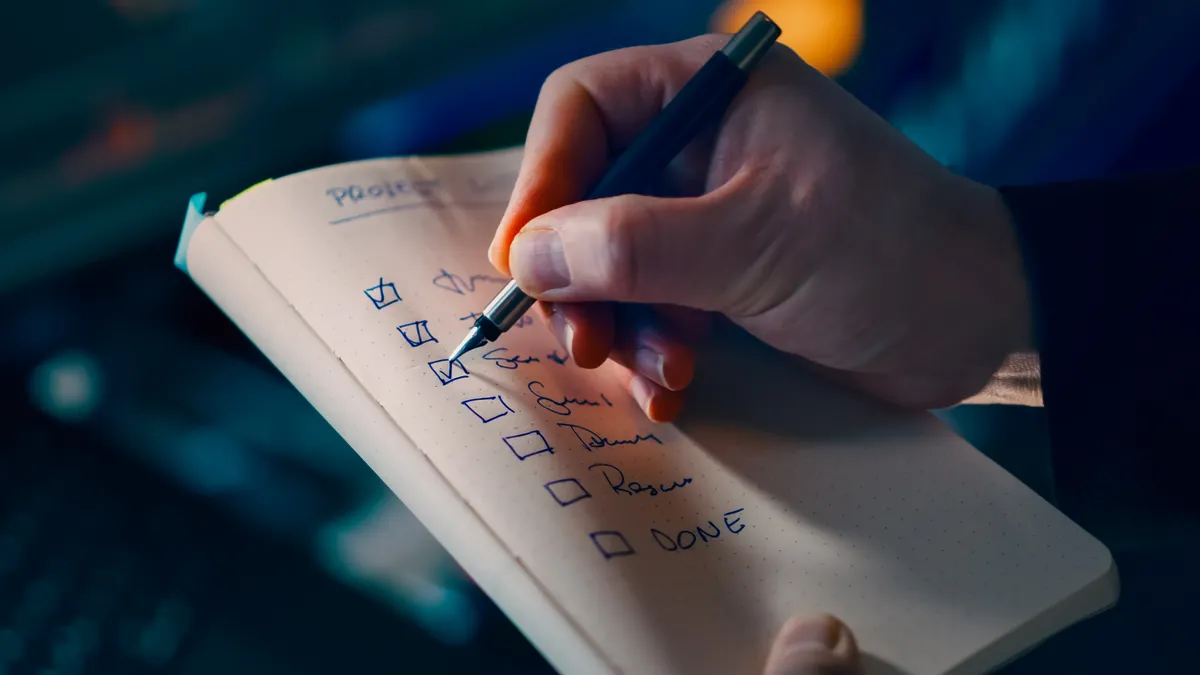
The checklist needs to catch three things: factual drift, thin writing, and brand mismatch. If your AI draft is for a low-stakes topic like office snacks, the checklist can stay light. If it touches money, health, legal issues, or anything with compliance risk, the checklist has to be stricter and slower. The FTC’s advertising guidance is a good baseline for claims that reach readers as marketing.
I would build the checklist around the failures AI drafts most often create: invented specifics, vague claims, repetitive structure, and tone that sounds plausible but not like your publication. The goal is not to punish the model. The goal is to make it easy for an editor to answer, in 2 minutes per item, “Can this go out?” The APA Style guidance is useful when claims need citations and source discipline.
Here is the simplest way to think about it:
- Accuracy: every claim can be traced to a source or removed.
- Usefulness: the post gives a real next step, not just generalities.
- Voice: the draft sounds like your brand, not a generic prompt response.
- Risk: sensitive claims get a second review, not a quick skim.
| Situation | Best Path | Why Other Options Fail |
|---|---|---|
| Fast-moving content with low stakes | Short checklist with 10–15 items | A 40-item list slows publishing without adding much value |
| Expert or regulated content | Checklist with source, legal, and fact-check gates | A generic checklist misses the expensive mistakes |
| Multiple writers or freelancers | Standardized checklist in a shared doc or Notion page | Email feedback fragments the process |
| One-person blog | Personal checklist with a few hard stops | A complex workflow becomes ignored within a week |
A good checklist also names what happens when a box is not checked. “Fix it later” is not a process. “Send back to draft” is a process. For workflow setup, see content brief template and blog post workflow.
Quick check: if your biggest fear is publishing something false, generic, or off-brand, you need a checklist with hard stops, not a polite reminder list.
How do you create an editorial checklist for AI-generated blog posts?
You create it by mapping the draft from prompt to publish and inserting a check at every place AI output can go wrong. That usually means 5 stages: brief, draft, fact-check, edit, and final approval. In practice, this turns one loose review into 5 smaller decisions.
Start with the actual workflow. If a writer uses ChatGPT, Claude, or Gemini to produce a first draft in 10 minutes, then the checklist should not pretend the draft is “almost finished.” It is raw material. If your process includes human research before prompting, then the checklist can be shorter on facts and longer on structure and voice. For prompt planning, AI content workflow can help teams define the handoff.
Use this path:
- Define the post type. Mark whether it is informational, comparison, thought leadership, or SEO support content. A how-to post needs stricter step logic than a trend piece.
- List the non-negotiables. Add items like “all claims have sources,” “title matches search intent,” and “no unsupported superlatives.”
- Set risk tiers. Use 3 tiers if you like: low risk, standard, high risk. For high risk, require a second human review and source links.
- Write checks as pass/fail questions. “Does the intro answer the search query in 2 sentences?” is better than “Improve intro.”
- Attach owners. Decide who checks what: writer, editor, subject expert, legal reviewer, or SEO lead.
- Build revision rules. If a claim lacks a source, the fix is removal or citation, not a nicer sentence.
- Store the checklist where work happens. Put it in Notion, Airtable, Google Docs, Asana, or your CMS so it is used every time.
The checklist should be short enough to finish in one sitting. I would aim for 15–25 items for most blogs, then add a separate high-risk checklist for regulated topics. If you try to make one master checklist for every case, people stop using it. A simple editorial calendar can help place the checklist at the right stage.
Quick check: if your editors keep making the same corrections, your checklist is missing the step that would have caught them earlier.
What should be on the checklist, and in what order?

The checklist should move from facts to structure to style to publishing risk, because that is the order in which problems become expensive. If you check voice before accuracy, you can end up polishing a wrong draft. If you check SEO before usefulness, you can optimize a weak piece. The NIST guidance on AI risk management is a useful reference point for teams deciding where controls belong.
A practical order looks like this:
-
Purpose and audience
- Does the post answer one clear question?
- Is the reader a beginner, buyer, or practitioner?
- Is the search intent informational, commercial, or transactional?
-
Source and accuracy
- Are all named tools, standards, dates, and claims verified?
- Are unsupported percentages removed?
- Are product details current enough for the topic?
-
Structure
- Does each section add something new?
- Does the post move logically from problem to answer to action?
- Are there any duplicate paragraphs or recycled headings?
-
Editorial quality
- Is the writing specific?
- Are examples concrete?
- Is the tone consistent with the publication?
-
SEO and formatting
- Does the H1 match the topic?
- Are H2s useful, not stuffed?
- Are bullets, tables, and short paragraphs used where they help scanning?
-
Compliance and brand risk
- Does the post avoid medical, legal, or financial overreach?
- Are affiliate, sponsorship, or disclosure requirements handled?
- Would legal or compliance want a second pass?
For a blog using tools like Jasper, ChatGPT, or Surfer, I would also add a “model output” check: did the draft hallucinate a feature, a pricing detail, or a company policy? AI content often sounds confident exactly where it is weakest. That is why source checking belongs near the top. For current platform rules, the OpenAI usage policies are also worth reviewing.
The trade-off is simple: the more factual your niche, the less tolerant the checklist should be of vague language. A lifestyle blog can accept “often” or “usually” more than a cybersecurity blog can. For example, a finance post may need a source on every rate and date, while a travel post may only need source checks on timetables and fees.
Quick check: if your checklist starts with grammar and ends with sources, swap that order.
Which checks change when the post is AI-generated?
The checklist changes when the draft comes from AI because you are not editing a human draft that already contains judgment, memory, and constraints. You are verifying a fast synthesis that can be fluent and wrong in the same paragraph.
The biggest change is that I would add explicit checks for hallucination, generic filler, and unsupported confidence. A human writer may leave a gap. AI often fills the gap with something that sounds finished. That is not the same problem.
Here is the difference in practice:
- Fact-checking gets stricter. AI can invent feature names, article titles, laws, and “best practice” claims.
- Tone checking gets stricter. AI may drift into bland, polished language that fits nowhere.
- Originality checking matters more. Repeated phrasing and samey structure are common.
- Editorial judgment must be explicit. A human editor cannot assume the draft knows what matters most.
If you publish tutorials, product roundups, or comparison posts, I would require a line-by-line source check for names, pricing references, and feature claims. I would also flag phrases like “the best,” “guaranteed,” and “perfect for everyone” unless they are clearly framed as opinion or backed by a real standard. For product claims, product review standards can give editors a clearer gate.
Useful sources for policy and standards often include the FTC’s advertising guidance, the APA Style guidance for citations, or NIST documentation when technical claims need grounding. I am not claiming those are the only references you should use; I am saying they are a strong starting set for a checklist that needs to stay credible.
The standard advice is not enough when it treats AI drafting as just another writing tool; consult a professional or subject expert when the topic is regulated, and use a source-backed review process. It is not. It changes where the risk sits.
Quick check: if your drafts sound polished but still need heavy fact correction, you need AI-specific checks, not a normal copyedit pass.
When the standard advice is wrong
The standard advice is wrong when it tells every team to use the same checklist. Different content types fail in different places, and the checklist should reflect that.
Use these edge-case rules:
-
Situation: your post is about health, finance, or legal topics.
What changes: accuracy and scope matter more than style.
What to do instead: add a subject-matter review gate and require primary sources or authoritative bodies. Keep the checklist stricter than you would for general marketing content. -
Situation: the article is a news-adjacent summary of a fast-changing product or platform.
What changes: details age quickly.
What to do instead: check the publish date, current product names, and whether the claim still holds on the live site or docs page. -
Situation: the draft uses screenshots, code, or steps tied to a tool interface.
What changes: UI labels and menu paths can be wrong even when the prose looks fine.
What to do instead: add a visual verification step and one round of source cross-checking against current documentation. -
Situation: the piece is designed to rank for SEO but also needs to convert.
What changes: search intent and call to action can fight each other.
What to do instead: check that the post answers the query first, then makes the offer second. -
Situation: several AI drafts are combined into one article.
What changes: repetition and inconsistent voice multiply.
What to do instead: add a “single voice” pass and remove overlapping examples before line editing.
A simple rule helps here: if the consequence of being wrong is high, the checklist must verify source, date, and scope before it verifies style. If the consequence is low, the list can stay lighter and faster. That balance is what keeps an editorial checklist for AI-generated blog posts useful instead of performative.
Quick check: if you would be embarrassed by a wrong detail more than by a clumsy sentence, your checklist needs a harder factual gate.
How should you build the checklist so people actually use it?
You should build it as a working tool, not a policy document, or people will ignore it by week two. A checklist that takes 20 minutes to read and 40 minutes to complete is usually too heavy for routine blog work. The 10-minute rule is a useful target for low-risk posts.
I would keep the format brutally practical:
- One item per line.
- Pass/fail wording.
- No vague verbs like “improve” or “tighten.”
- A clear owner for each stage.
- A place for comments when a box fails.
If your team uses Notion, Google Docs, Airtable, Asana, Trello, or a CMS workflow, the checklist should live beside the draft, not in a forgotten SOP file. I would also create two versions: a short checklist for everyday posts and a high-risk checklist for sensitive content. A shared content checklist template can reduce setup time.
Use a cadence like this:
- Draft is generated.
- Writer runs the first checklist pass.
- Editor checks structure, accuracy, and tone.
- Subject expert checks claims if needed.
- Final publisher checks links, formatting, and disclosures.
- The post is archived with the checklist attached for later review.
The trade-off is speed versus certainty. A small team can run a lighter checklist and still stay safe on low-risk topics. A larger team needs consistency more than speed because inconsistency creates invisible errors.
Quick check: if no one knows who owns the final yes, the checklist is not finished.
What does a good AI blog checklist look like in practice?
A good checklist looks like a short set of hard questions and a clear stop rule. It does not read like legal language, and it does not ask the editor to “use judgment” on everything. Judgment is needed, but only after the obvious errors are blocked.
Here is a compact version I would use as a starting point:
- Does the headline match the search intent and promise one clear outcome?
- Does the opening answer the query within the first 2 sentences?
- Are all named tools, features, dates, and claims verified?
- Are any unsupported superlatives removed?
- Does the post avoid repeated points and generic filler?
- Does each H2 add a distinct job for the reader?
- Are examples specific enough to be useful?
- Does the tone match the publication?
- Are high-risk claims flagged for expert review?
- Are links, disclosures, and formatting ready for publish?
That is enough for many blogs. It is not enough for regulated content, product comparison pages with exact feature claims, or any post where a wrong detail could cause real harm. In those cases, I would add a second sheet with source-level verification and approval names. For on-page clarity, meta description guide and SEO checklist can sit beside this workflow.
The best test is simple: if a new editor can use the checklist without asking what the items mean, it is probably usable.
Quick check: if your team would actually complete the checklist before lunch, it is likely the right size.
FAQ
How long should an editorial checklist for AI-generated blog posts be?
For most blogs, 15 to 25 items is enough; high-risk topics may need a separate checklist. If it takes more than about 10 minutes to use on a normal post, it is probably too long.
Should the checklist be different for ChatGPT, Claude, or Gemini?
The core checklist can stay the same, because the risk is the same: unsupported claims, generic language, and bad structure. The prompts may differ by tool, but the editorial questions should not.
Who should own the checklist?
The editor should own it, with subject experts or legal reviewers added only when the topic needs them. If everyone owns it, no one does.
Can a checklist replace human review?
No. It can reduce misses and standardize review, but a person still needs to decide whether the post is accurate, useful, and safe to publish.
Drafted with AI; not yet reviewed by a person.